
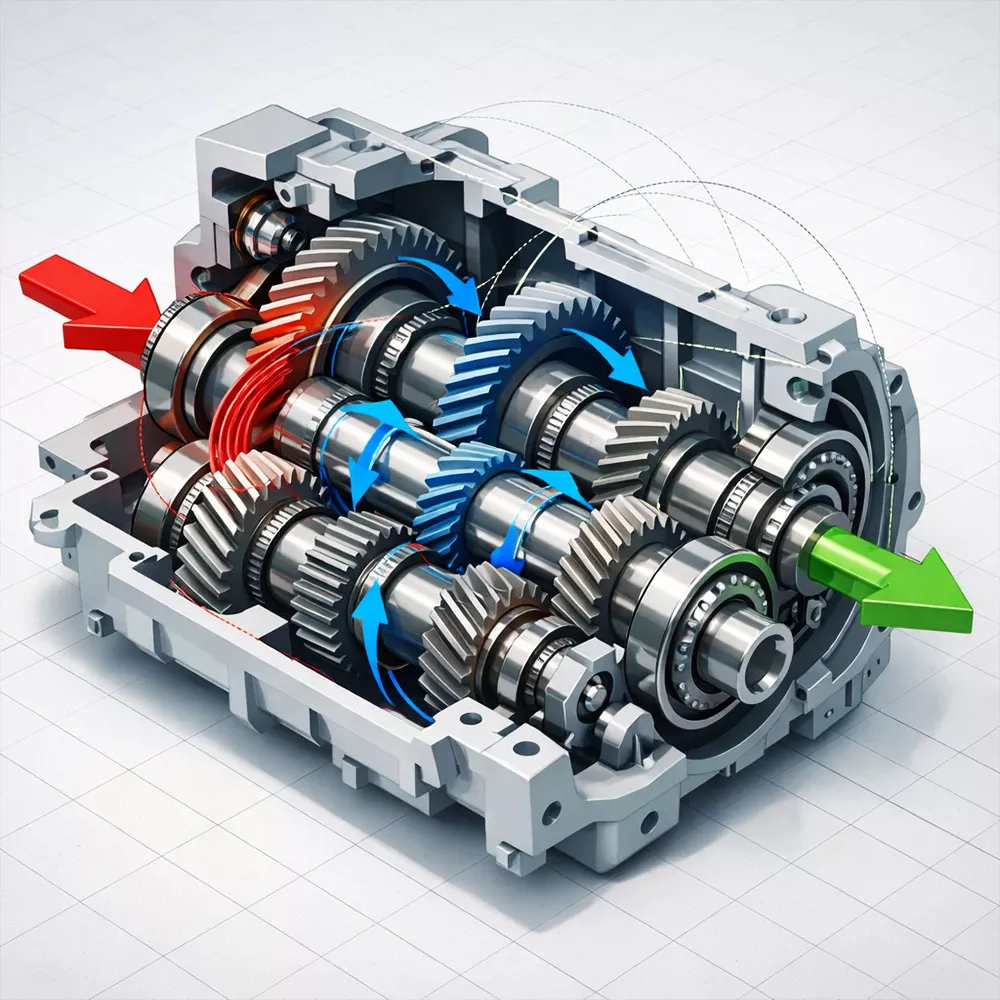
Mechanical Power Systems: Architecture, Energy Flow, and System-Level Behavior
Mechanical power systems are engineered assemblies designed to transmit, transform, and control mechanical energy from a source to one or multiple driven elements. Unlike individual components, these systems exhibit collective behavior governed by architecture, energy flow continuity, and interaction between elements.
In marine and heavy industrial applications, mechanical power systems operate under variable loads, harsh environments, and limited maintenance access. As a result, system-level understanding is critical to predictable performance and long-term reliability.
Defining a Mechanical Power System
A mechanical power system is not defined by a single device but by an interconnected chain of elements that collectively manage:
- Power generation or input
- Torque transmission and conversion
- Speed regulation
- Load distribution
- Energy dissipation and loss control
Common system elements include prime movers, shafts, couplings, gear stages, bearings, and driven equipment. The removal or misbehavior of any element alters the performance of the entire system.
System Architecture and Functional Hierarchy
Architecture defines how power flows through the system and how responsibilities are distributed among components.
Typical architectural questions include:
- Is the system linear, branched, or looped?
- Where is speed reduction or multiplication performed?
- Which elements are designed to be sacrificial or protective?
Clear functional hierarchy ensures that overloads, misalignment, and dynamic effects are managed intentionally rather than propagating unpredictably.
Energy Flow and Power Continuity
Mechanical power systems exist to transport energy. Any discontinuity in energy flow—whether caused by stiffness mismatch, misalignment, or poor interface definition—introduces losses, vibration, or instability.
Effective systems maintain:
- Continuous torque paths
- Controlled compliance where flexibility is required
- Predictable energy dissipation zones
Energy flow analysis allows engineers to identify inefficiencies and potential failure mechanisms before damage occurs.
Load Distribution and System Interaction
Loads in mechanical systems are rarely uniform. Torque variations, bending moments, and axial forces interact simultaneously, influenced by operating conditions and boundary constraints.
System-level behavior emerges from:
- Load sharing between parallel elements
- Alignment sensitivity across interfaces
- Dynamic amplification under transient events
Ignoring interaction effects often results in components being overstressed despite meeting individual design limits.
Dynamic Characteristics of Power Systems
Mechanical power systems are inherently dynamic. Start‑ups, shutdowns, speed changes, and load fluctuations generate transient responses that dominate real-world performance.
Key dynamic considerations include:
- Torsional stiffness and damping
- Resonance proximity
- Backlash and compliance effects
Systems designed only for steady-state conditions frequently experience unexpected vibration and fatigue damage.
Interfaces as System Control Points
Interfaces—such as coupling joints, shaft connections, and bearing supports—serve as both mechanical and behavioral boundaries.
Well‑defined interfaces:
- Control load transfer
- Accommodate misalignment and thermal expansion
- Limit shock transmission
Poor interface definition is one of the most common sources of system‑level failure in mechanical power systems.
Reliability at the System Level
System reliability cannot be achieved by over‑designing individual components. It is a product of balance between architecture, load assumptions, and interaction control.
Key contributors to system reliability include:
- Redundancy or load-sharing strategy
- Accessibility for inspection and maintenance
- Predictable degradation modes
A reliable system fails gracefully, not catastrophically.
Mechanical Power Systems as Integrated Structures
Mechanical power systems should be evaluated as integrated mechanical structures rather than as collections of parts. Performance, efficiency, and durability are emergent properties resulting from system configuration and interaction.
Understanding this integrated behavior enables engineers to design systems that remain stable and predictable under real operating conditions.
Conclusion
Mechanical power systems represent the backbone of marine and heavy industrial machinery. Their performance is dictated not by individual components, but by system architecture, energy flow continuity, and dynamic interaction.
This category focuses on system-level understanding, forming the foundation for deeper analysis into design logic, reliability engineering, and failure diagnostics presented in related sections.
