
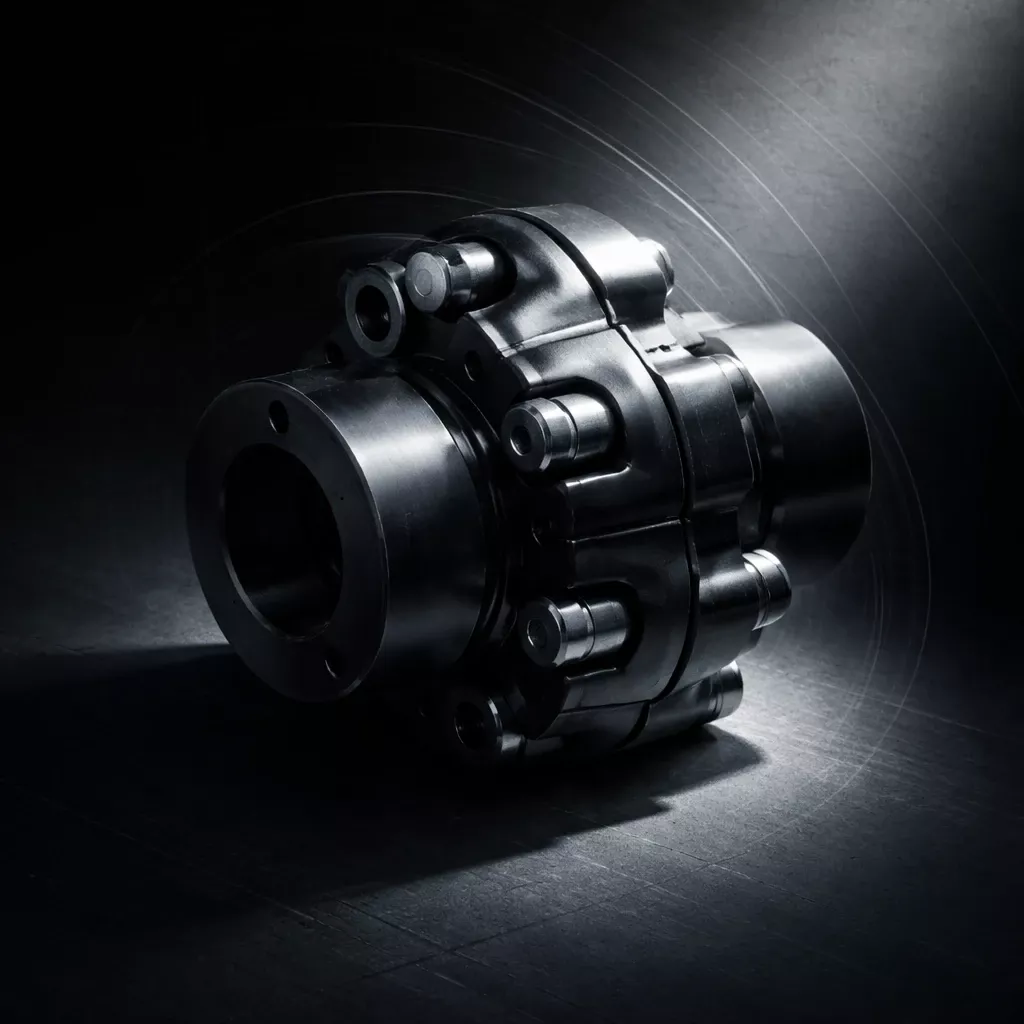
Reliability in industrial couplings is often discussed as an outcome of material quality or nominal torque capacity. While these factors matter, they do not explain why couplings with similar specifications can behave very differently over long operational lifetimes. The true origin of reliability lies deeper—within what can be described as brand discipline.
Brand discipline is not branding. It is the accumulated consistency with which a manufacturer makes engineering decisions under uncertainty. In industrial couplings, this discipline determines how tolerances are set, how degradation is expected to occur, and how much variation a design is allowed to absorb before performance begins to drift.
Reliability Is Engineered Long Before the Product Exists
In coupling design, reliability is not created at the moment of installation. It is built upstream, through decisions that constrain or enable future behavior. Choices about rubber formulation, bonding philosophy, stiffness gradients, and acceptable hysteresis are made long before a coupling reaches a shaft.
Some brands enforce tight internal rules about elastic predictability, even if that limits adaptability. Others permit wider behavioral envelopes, prioritizing survival under poor alignment or inconsistent loading. Both approaches can result in “reliable” products—but they define reliability differently. One protects analytical stability; the other protects continuity of operation.
These differences rarely appear in datasheets. They emerge only when systems operate outside nominal conditions, which is where most industrial systems spend a significant portion of their lives.
Manufacturing Discipline as a Reliability Multiplier
Consistency in manufacturing is what allows an engineering philosophy to survive contact with reality. A disciplined brand does not merely design a coupling—it designs a repeatable outcome. This includes material sourcing, process control, inspection philosophy, and tolerance enforcement across production batches.
When manufacturing discipline is weak, even a sound design philosophy erodes over time. Variability replaces intent, and reliability becomes probabilistic rather than architectural. Conversely, when discipline is strong, small design compromises can still yield predictable system behavior.
Market‑level mappings of industrial rubber coupling manufacturers, such as those referenced on SEAWIDE‑RUBBER, help illustrate how different brands translate manufacturing discipline into long‑term coupling behavior. These references are valuable not as selection tools, but as lenses for understanding how reliability is structurally embedded.
Where Reliability Actually Lives in the System
From a system perspective, coupling reliability is inseparable from where failure is allowed to occur. Some brand disciplines favor couplings that sacrifice themselves early to protect gearboxes and bearings. Others allow gradual stiffness change or damping loss to avoid abrupt system disruption.
Neither approach is universally correct. What matters is alignment between the coupling’s reliability philosophy and the system’s maintenance culture, monitoring capability, and tolerance for degradation. Problems arise not from poor products, but from mismatched disciplines.
Understanding brand discipline shifts reliability assessment away from slogans and service life claims. It reframes reliability as a design decision enforced by manufacturing behavior, not a feature added after the fact.
In industrial couplings, reliability is not something you buy. It is something a brand repeatedly proves—by making the same engineering decisions, the same way, under the same constraints, year after year.
